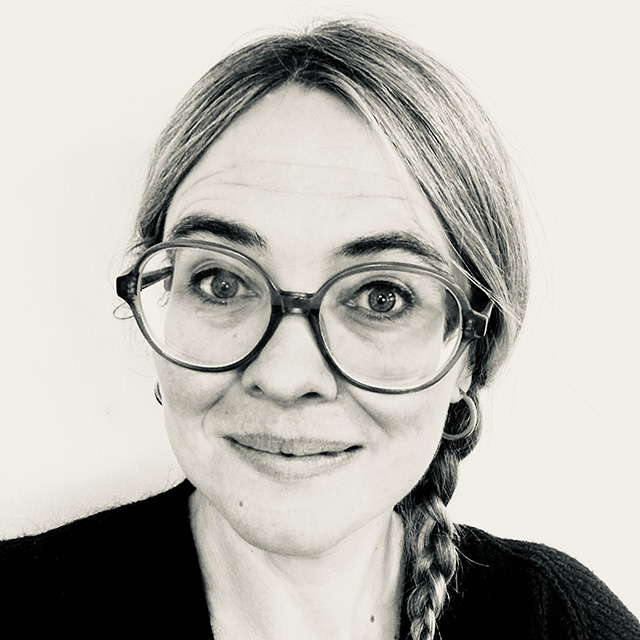
Emilie Taylor, Artist and Embedded Researcher at Sheffield Hallam University, writes about the Lived Experience Ambassadors Project.
A co-produced community research project
The Lived Experience Ambassadors Project built upon work started by Cast, a theatre in Doncaster, in the months preceding the Creative Health Boards Research project beginning.
Cast is ‘proud to be the theatre for the people of Doncaster and beyond!’ (www.castindoncaster.com) and operates in an area where many of its communities experience socio-economic deprivation. According to Doncaster’s Public Health Annual Report (2023), 42% of Doncaster residents live in the 20% most deprived areas of England and 35% of children in Doncaster live in poverty. It is unsurprising then that in this challenging context, engagement in the arts is low, with Doncaster ranking 7th lowest in cultural engagement among all regions in England.
Cast are advocates of the power of theatre to inspire, connect, and enrich lives, believing the arts bring proven benefits, from reducing anti-social behaviour and boosting employability to developing transferable skills, improving wellbeing, and strengthening community. They work with communities facing significant barriers including disability and life limiting illness, past trauma, low income, social isolation, poor mental health and lack of family support.
Appointed in Spring 2024 three Community Ambassadors, (CA’s) were part of an experiment to determine if local volunteers would recruit and enable more people facing barriers and/ or experiencing health inequalities to access Cast.
Ambassadors were actively identified and approached by the Community Engagement Manager, (CEM), as meeting the combined criteria of being alumni of Cast community programmes themselves, having a strong connection to the power of theatre to support wellbeing in their own lives, and being connected to a Doncaster community that was underrepresented at Cast. Target communities were people seeking asylum or with refugee status currently living in Doncaster, the African and South Asian diasporas and people with long term health needs or experiencing health inequalities.
In 2025, I was assigned to Cast as an Embedded Researcher, part of the UKRI funded Creative Health Boards project delivered by Sheffield Hallam University. Working with the Participation Team and the three Community Ambassadors selected in 2024, we reflected on the initial six months’ work – now referred to as the trial period – using a series of interviews and group discussions. It was then decided to invest in a second round of Ambassador trips, using UKRI funding, in the hope of gathering more extensive quantitative data and enabling deeper collaborative reflection on the future of the scheme.
Initial learning from individual interviews organised with each Ambassador, the Head of Participation and the Community Engagement Manager, supported by data gathered by the CEM during the trial, and data from questionnaires completed in the trial period, informed the co-design of a 12-month project. Designed to amass more clear data about who the Ambassadors work was capable of reaching and what the impact for Cast and Doncaster could be.
Further hopes were to better understand how this scheme, or similar, could be embedded in other creative health assets in the long term.
The study combined quantitative and qualitative methods to investigate the following questions:
- Was the ‘Community Ambassadors’ trial scheme a successful way to reach and engage target communities with CAST?
- What is the impact of a planned 12-month Ambassador scheme on engagement and retention of target communities?
- How does the learning from the planned 12-month scheme inform the creation of a new scheme/further cohort of Ambassadors working in new areas?
- How can the Ambassador method be recorded and utilised by other projects/cities/CHB’s?
Multiple choice questionnaires were designed, to be completed by attendees at the start of each theatre visit, to gather information about who attended the trips. Due to the poor uptake of the web-based questionnaire in the trial period, and in response to Ambassador feedback at interview, it was decided to issue a paper questionnaire, (with translation in five community languages), and support to complete if needed from theatre and research staff. The return of physical paper questionnaires directly to the researchers meant it would be easy to ensure everyone had completed one before entering the theatre.
‘The only thing was, with some of our people, they’re not tech-savvy. If they’d had the opportunity to do the questionnaire on paper they would have quite happily done it… I know its more work for inputting. But there’s some people who just cannot cope with doing things online. A lot of them said it would have been easier for them if they could have written or ticked something’. (Ambassador 2024-2025)
Oral interviews with volunteer Ambassadors, the CEM and the Participation Manager took place at the end of the trial period and again after 12 months project delivery and informed written Case Studies compiled by the researcher and graphic case studies illustrated by Artist Elodie Ginsbourg, working in collaboration with the Researcher and each Ambassador.
Survey Data
100% of attendees returned surveys. 172 people attended across 12 visits – an average of 14 people per visit.
Returning to Cast’s original aims, target communities were people seeking asylum or with refugee status currently living in Doncaster, the African diaspora and people with long term health needs or experiencing health inequalities. (Health inequalities were felt to be best measured using postcodes of the neighbourhoods where they had been identified as being particularly prevalent by the English Indices of Deprivation 2025).
| Nationality | Number | % |
|---|---|---|
| White British | 44 | 25 |
| Kurdish | 30 | 17.3 |
| Sudanese | 23 | 13.3 |
| Eritrean | 12 | 7 |
| Afghan | 11 | 6.3 |
| Iraqi | 10 | 5.7 |
| Syrian | 9 | 5.2 |
| Yemeni | 5 | 2.8 |
| Turkish | 5 | 2.8 |
| Iranian | 3 | 1.73 |
| Senegalese | 2 | 1.15 |
| Bahranian | 1 | 0.5 |
| Moroccan | 1 | 0.5 |
| Egyptian | 1 | 0.5 |
| Kuwaiti | 1 | 0.5 |
| Palestinian | 1 | 0.5 |
| Gambian | 1 | 0.5 |
| Black British | 1 | 0.5 |
| Didn’t give nationality | 12 | 7 |
Statistics demonstrated that 75% of people attending were not white British. 22.95% of attendees were from the African diaspora. 66.28% of attendees were either refugees or seeking asylum in Doncaster.
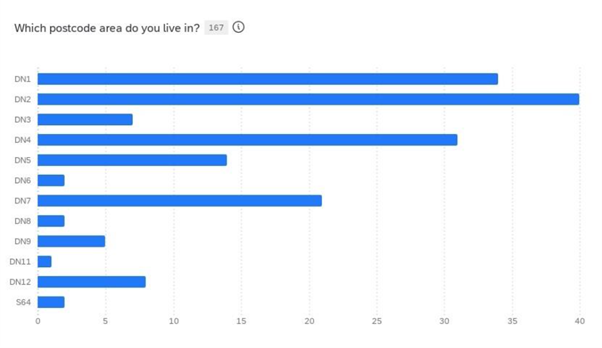
Highest levels of attendance were from people living in the target postcodes of DN1, (20%), DN2, (24%) and DN7, (13%). Thorne and Moorends – also target areas – lie in the DN8 postcode district which was less well represented at 1%.
16% of people attending identified as living with a long-term health issue and 14% said they lived with a disability.
43% of people attending had not been to Cast before, and 39% had not been to a theatre before.
Unexpected Outcomes – Creative Health, Asylum Seekers and Refugees
The project delivered unexpected findings that influenced a wealth of new developments, and new creative health initiatives for people seeking asylum and people with refugee status in Doncaster.
- New Creative Health Offer for Migrants and Refugees: Cast developed a new drumming group, ‘Citizens of the World Music Group’, led by local Ghanaian musician Kweku Sackey. The group has been well attended by up to 17 asylum seeking men each week, who identified benefit for their mental health and strengthened community cohesion.
- Cultural Asset Collaboration: The Creative Connector linked together the drumming group with the artmaking group ‘Creative Directions’ taking place in the afternoon, at Darts. The services collaborated to provide lunch for the men and a chaperone between projects, to enable them to attend both creative health sessions. This improved the offer, introduced the men to further support, and helped secure new funding streams.
- Strengthened Partnership with Changing Lives: The CEM at Cast and the Specialist BME Worker at Changing Lives felt the relationship between their organisations had been strengthened by the trips. Information gathered through the trips had been useful in obtaining further funding for Changing Lives work and Cast and Changing Lives had collaborated on successful funding applications for further activities and celebrations.
- New Job Role: Changing Lives recruited Yogeswaran Krishnamoorthy to a new role- Outreach Migrant Health, Wellbeing & Engagement Navigator specifically tasked with working in the hotels housing men seeking asylum. This role developed out of a combination of work happening at Changing Lives and work in partnership with Cast, and this was referenced in funding applications for the role. Part of Yoge’s week is to accompany the men to the drumming sessions.
- Celebrations: Two celebration days were held at Cast inspired and coproduced by the new partnerships. World Refugee Day Celebration 20th June 2025 with 160 attending, (organised by Cast and Changing Lives and working with Migrant Action and the Refugee Council), and International Men’s Day 19th November 2025 (organised by Cast and Changing Lives). Both were well attended by the refugee and migrant community, professionals in the sector, commissioners and local government.
- Appointment of an Ambassador with Lived Experience of Seeking Asylum: It was decided to appoint someone from the community of people seeking asylum who had attended the trips in 2025 and held a key role in establishing the drumming, to become an Ambassador in 2026.
Summary & Recommendations
The ‘Community Ambassadors’ trial scheme was a successful way to reach and engage target communities with CAST. It required adaptions to methods of data collection – understanding of low levels of technology literacy in target communities, and for research materials to be available in community languages to increase the success of data collection and therefore the evidence base.
A planned 12-month Ambassador scheme, with paper data collection and translated materials evidenced sizeable impact on engagement of target communities- qualifying what the CEM had observed in the trial. It was particularly effective at including people from the African diaspora and people seeking asylum or with refugee status, (due to Ambassadors selected), and through spending time together provided learning about what further activities would be suited to including those communities in the long term. This enabled the beginning of deeper integration of those communities in the theatre through celebration events and creative health activities tailored to their needs.
Through the Ambassadors relationship with other services Cast’s partnership working was strengthened and extended resulting in combined funding bids, new roles in services and new creative health activities created in partnership.
A New Model
Cast’s original motivations – to increase diversity in attendance particularly from the African and South Asian diaspora’s, and to increase inclusion of those experiencing health inequalities – are motivations shared by other creative health assets in the city, and the Doncaster Creative Health Board, (DCHB), of which Cast is part.
The Creative Connector role, (created by the UKRI project and assigned the responsibility of improving connection with creative health in Doncaster see blog…. ), currently works at both an individual and a strategic level. Supporting individuals to access creative health services and working to develop professional partnerships beneficial to the sector in Doncaster. A new Ambassador scheme, potentially with oversight from the Creative Connector role, could enable some of this individual support and access work with potential creative health participants to be carried out by people bringing their lived experience and community connections, which could increase diversity and inclusion in creative health at a city-wide scale. The scheme could also offer benefit for those taking part in the form of workplace training, learning about creative health and the opportunity to gain placement experience.
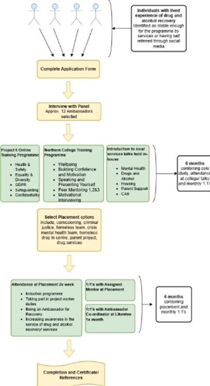
I have been learning more about the Drug and Alcohol Recovery Ambassadors scheme in Sheffield, currently overseen by Scott McKay at Likewise (Figure i). The scheme has been running for 20 years now with multiple benefits for services, service users and ambassadors, and a strong record of employment after completing the scheme (33% of 24 Ambassadors completing the scheme between 2023-2025 found employment).
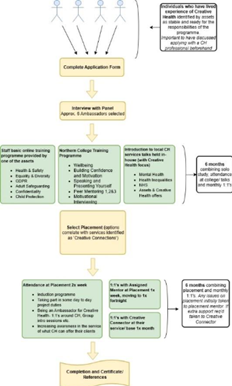
In Figure ii I have adapted the scheme to translate to the creative health landscape in Doncaster, and to work with the ‘Creative Connection’ model envisioned by the Creative Connector to offer placements for Ambassadors. The scheme would be managed by the Creative Connector and could potentially:
- Create facilitated bridges into creative health for target communities who are not currently accessing.
- Contribute a culture of lived experience to the work of the Creative Health Board.
- Increase awareness of creative health and its impact, in other community assets and organisations.
- Increase employment amongst people who experience health inequalities and are long-term unemployed.
- Contribute to workforce development in creative health.
The next phase of this work is to investigate this model in more depth and consider how it could work with the community assets, its relationship to the Creative Connector role, and its position in relation to social prescribing. Watch this space…!
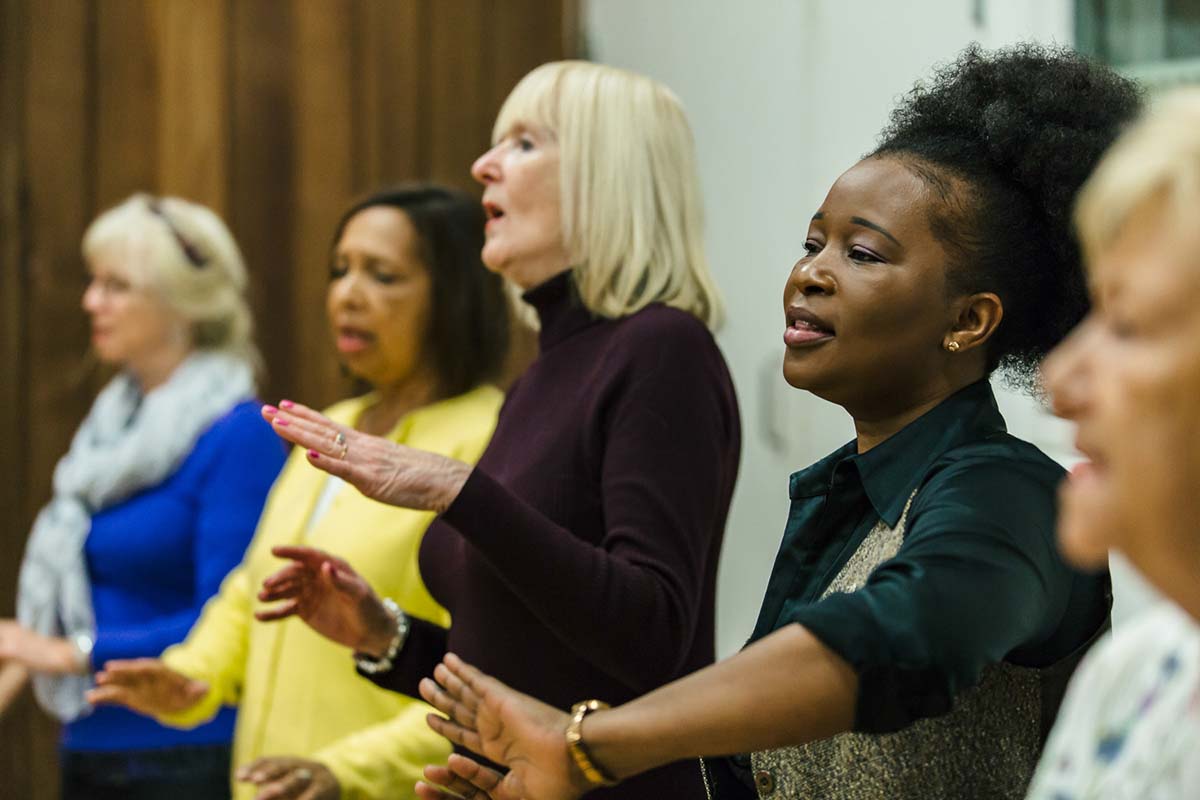
Credit: Featured photo – James Mulkeen.
Cite this article:
Taylor, E. (2026, April 24). The Lived Experience Ambassadors Project. Creative Health Boards. https://doi.org/10.7190/chb.2026.4860205400