
Chris Dayson, Professor at Sheffield Hallam University and Principal Investigator of the project, talks about conditions for change.
At a recent team meeting one of our Embedded Researchers, Clair Malaney, shared some insights about some research she has been doing into examples of how creative health activities have been commissioned by the health system in Doncaster. This led to a fascinating discussion about what the conditions are for successful creative health commissioning locally. Although I don’t want to second guess the full research findings (the project is still ongoing), a number of key ‘conditions for change’ stood out me for:
- Timing: when creative health activities have first been commissioned, it is nearly always as part of system change, re-design or quality improvement process. It is during these moments of transition when commissioners are most receptive to doing things differently.
- Ideas: timing is not enough, however. You need a good idea, ideally backed by some evidence and experience, to propose to commissioners that is aligned with their plans for change.
- Resources: somebody needs to put some resources into your idea so that you can mobilise and deliver quickly, even if this is just a small-scale pilot.
- Goal alignment: ultimately, change happens because people from different organisations and sectors come together around a shared mission or common values and agree to try some different in the hope that it improves the way services are provided.
So, what’s this got do with policy windows? ‘Policy windows’ (after Kingdon, 1995) is a theoretical approach within the field of Public Administration. It is one of a number of theories that are often grouped together and described as the Multiple Streams Approach (MSA). These approaches argue that policy change occurs and policy ideas become established as mainstream policy agendas following the coupling of three streams: problems, policies and politics.
- The problem stream helps explain how and why particular issues come to be considered problematic.
- The policy stream describes the range of potential strategies, interventions or solutions available to policy actors.
- The politics stream consists of party politics and electoral imperatives. It is affected by electoral cycles and changes in government, but also by changes in response the ‘national mood’, and lobbying, advocacy and pressure groups.
An analogy is drawn to biological natural selection in which ideas float in a ‘primeval soup’ waiting to be selected. Strategies are proposed by multiple interests (inside and beyond government) but they will be selected and persist if they are: (1) technically feasible; (2) aligned with dominant political or organisational values; and (3) anticipate future constraints (including cost).
However, the existence of the three streams in and of themselves is insufficient for a policy window to open: first these streams must couple. According to Kingdon (1995), issues and options reach the policy agenda, and change becomes possible when the three ‘streams’ are coupled and a policy window opens. Streams can be coupled in a number of ways: through natural cycles (such as elections); when becomes politically expedient to address policy problems; and through the actions of a policy entrepreneur.
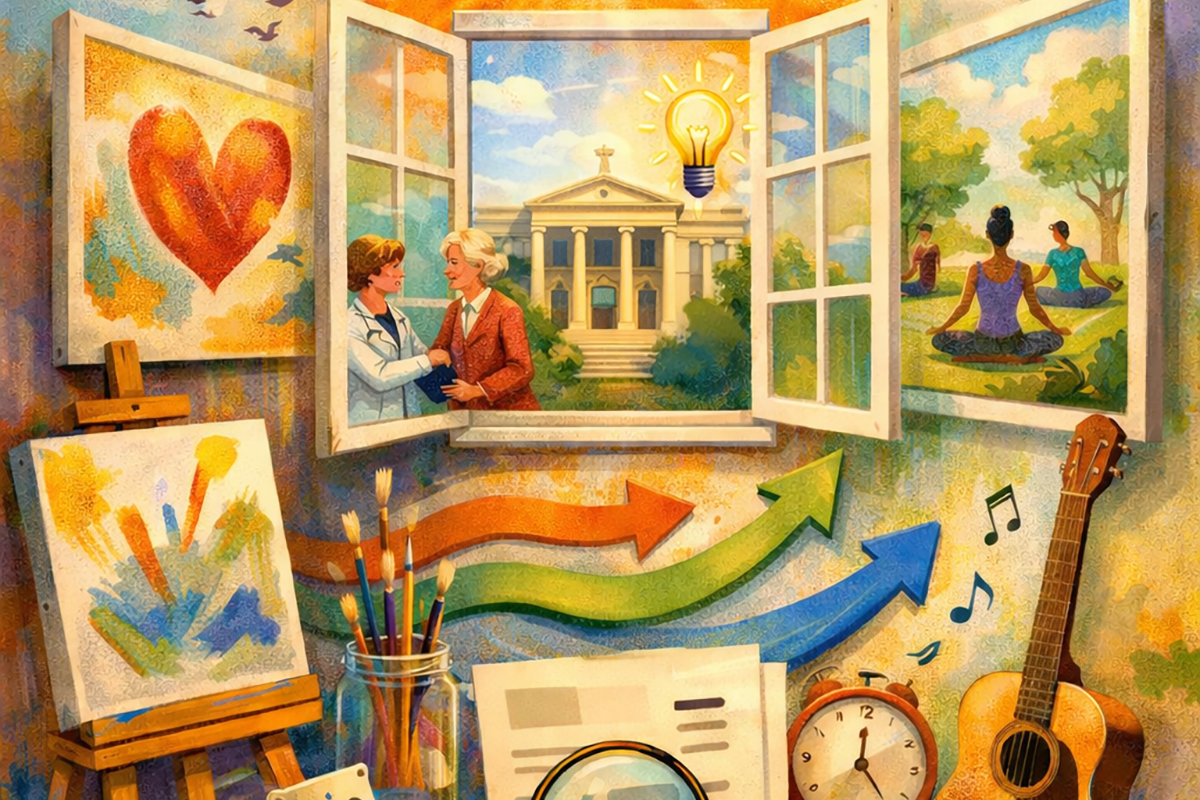
Typically, the policy windows framework has been used to explain and analyse policy change at a national level. But during our team meeting we started to discuss how the commissioning of specific creative health activities in Doncaster resembled what might be described as a micro or hyper-local policy window. At the same time, the national policy interest in creative health, and the wider social movement associated with social prescribing, resembles what we could describe as a macro or national policy window.


These two policy windows, operating at different scales, are clearly inter-related and inter-dependent. The macro window helps shape the policy narrative and raise awareness of the value of creative health. But the micro window is where the real action happens and where the evidence for change is created. Within both types of windows, policy entrepreneurs – changemakers from different sectors who advocate for creative health and connect people and organisations within the health system – play a vital role in ensuring that the multiple streams are able to couple and that the policy window can be leveraged open.
Metaphors aside (and I do love a metaphor), I think the framing of creative health as a micro and macro policy window, is an idea worth exploring further. There is clearly a need for more research into how Creative Health policy is developed and sustained, nationally and locally, if the progress of the past few years is to be maintained. By taking a policy windows approach, we can explore the inter-relationship and inter-dependency between national and local policy development around creative, and consider how these two layers can support each other more effectively and pro-actively.