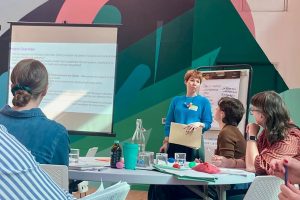
Dr Nicola Gill, a GP Training Programme Director at NHS England and freelance Medical Educator facilitated this session for professionals from the arts and culture sectors.
There is evidence that we should value art and creative activity to benefit our health and wellbeing in the same way that we value good nutrition, plentiful sleep and regular exercise. As Professor Sir Michael Marmot, in his role as commissioner for the NCCH Creative Health Review said, ‘engaging with art and creativity is what makes life worth living’.
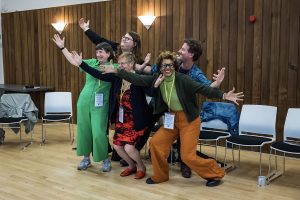
It’s no surprise that the multidisciplinary group of professionals from the arts and culture sectors who met in November 2025 for a training event embraced these views. Participants who attended the event came to explore the evidence for how art works and to discuss how this knowledge might help them promote their role in Creative Health projects.
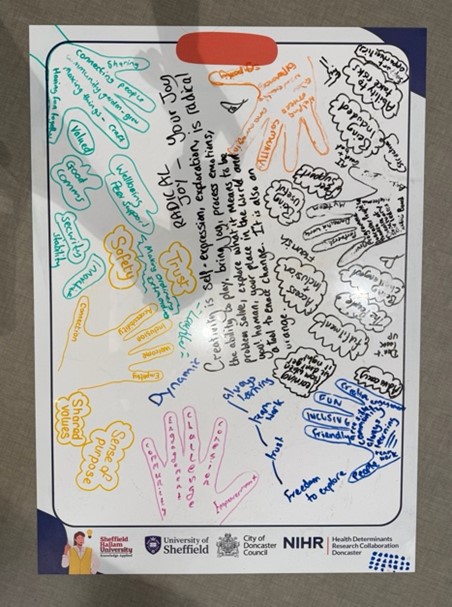
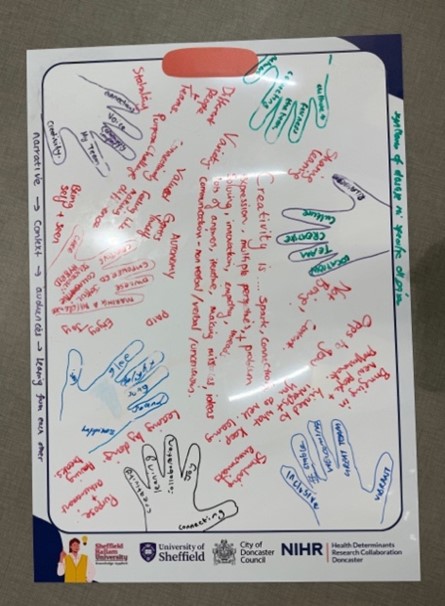
The scene for the event was set through virtual time travel back several thousand years ago to view artwork on the walls of our ancestors’ cave dwellings. The art, a montage of hand images, was created by blowing pigments – blood, dirt and herbs mixed with saliva to stencil outlines of individual hands on the cave wall. This art acts as a reminder that enjoying being creative, to connect and to record our existence, was as important to our ancestors as it is to us now. Participants stencilled their own hands on tabletop whiteboards and wrote words to describe what they value about work and contribute to their profession. This activity highlighted the importance for everyone to feel seen and heard in all aspects of their lives.
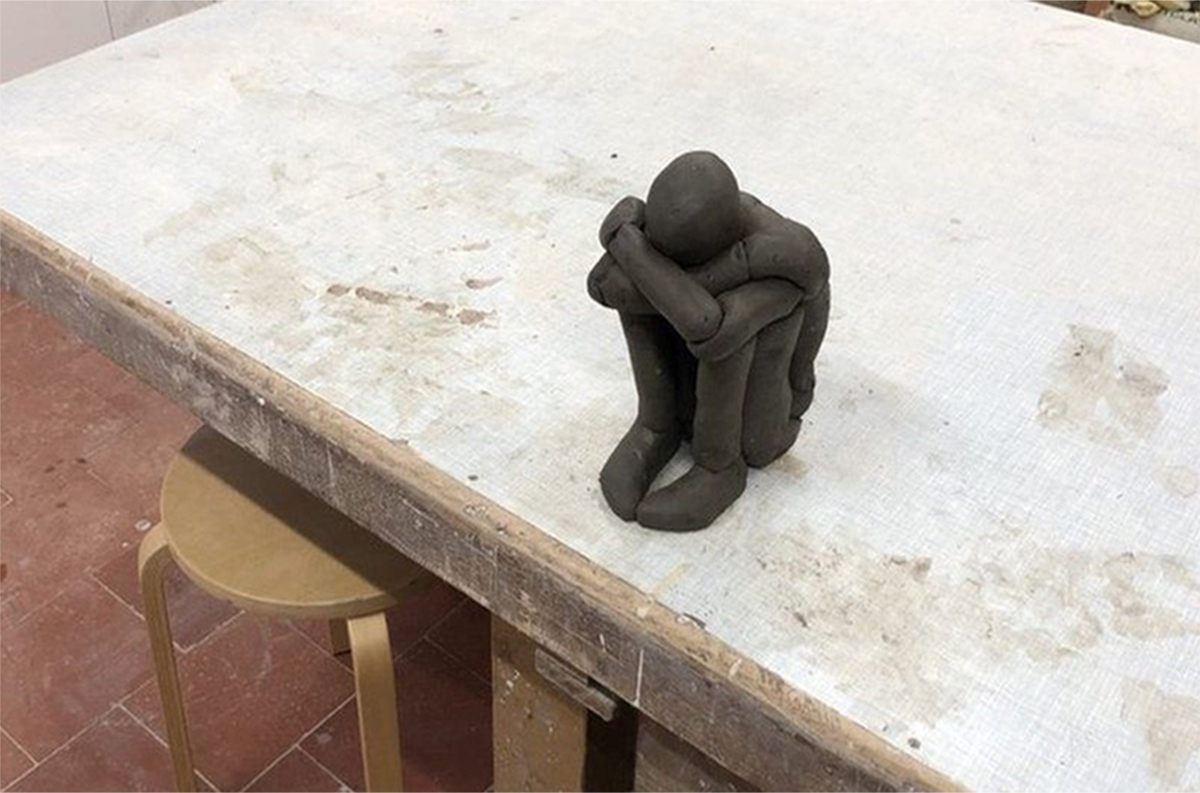
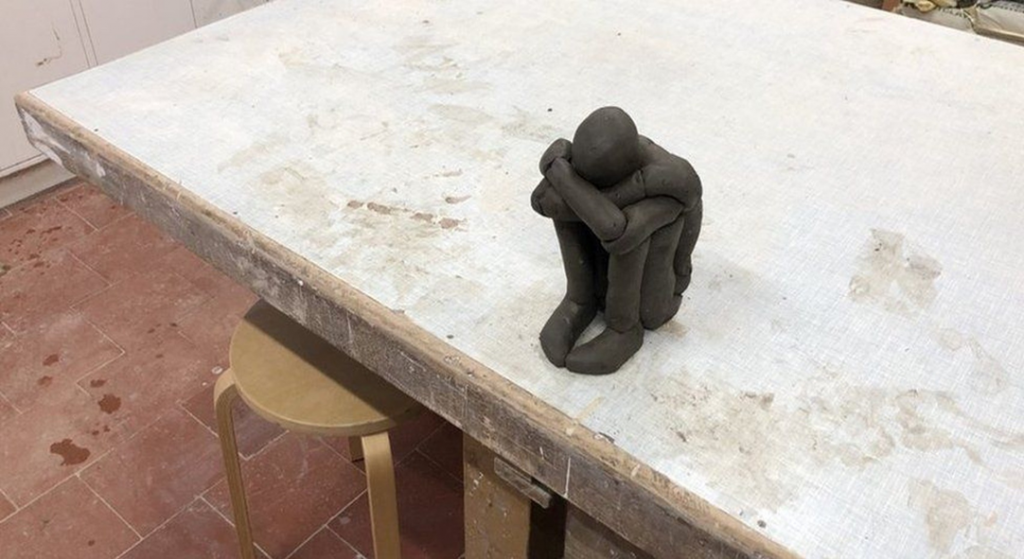
The event was hosted in the light and airy mezzanine space at The Danum Centre in Doncaster and was delivered in three parts. Firstly, participants were invited to consider the ‘bigger picture’ and discuss the role of art and creativity in society. Then, using Anthony Gormley’s sculpture ‘Hold’ as a catalyst for conversations, the second session focused on participants personal resources and needs and the benefits of art and creativity at an individual level. The final session encourage reflection on work roles and how participants might use knowledge from the event to effect positive change.
A key aim of the training event was to consider how the benefits of art and creativity are explained from a scientific perceptive. Artist, Greg Dunn’s incrediable images of the brain were used to illustrate how these benefits can be explained in terms of positive behavioural and neurophysiological change. You can read about this in more detail on The Art of Medicine Website and in the excellent books recommended later in this article.
Most participants already had a good working knowledge of how art works, but many said they found it hard to find the right words to describe these concepts to the public, funders and clinical colleagues. We agreed that having a shared understanding of the language used to describe creative health and clear scripts to explain how art works is an essential part of developing the benefits of creative health in our communities.
Other joys and challenges of engaging the public in creative health projects were discussed, and several themes emerged.
A large percentage of the public do not describe themselves as being creative, often confusing the word creativity with artistic skills. This can be a barrier to engagement with the arts or creative health projects. Participants at the event discovered how difficult it is to explain what creativity is.
Here are some of the words they used to define creativity:
- ‘Thinking differently- making something new.’
- ‘A spark, connection, expression, multiple perspectives, problem solving, innovation, empathy, lots of answers, making mistakes, ideas, communication.‘
- ‘Self-expression, exploration, the ability to play, bring joy, process in motion, problem solve, explore what it means to be you, human, your place in the world, and a tool to enact change.’
Maybe creativity is quite simple asking yourself the question, ‘I wonder what would happen if’?
Creativity is as essential in science as it is in art. It’s easy to forget this, maybe because we think of creativity as an artistic pursuit, and science and art are seen as separate disciplines. We should nurture creativity and collaboration at the intersection of the disciplines of art and science. Creative Health sits in this space and benefits everyone and so it is important that it’s benefits effects are being noticed and valued.
In small group discussion, participants commented on the need for greater appreciation and understanding of the work done in different sectors to improve health and wellbeing, and the potential for more collaboration and co-creation across disciplines.
The public and clinical colleagues don’t always appreciate the potential for art and creativity to improve health outcomes and wellbeing, perhaps the perception is that art is something you engage with when everything else in your life is good rather than art being part of what makes life good.
Several participants highlight the challenges associated with making projects accessible to all. Their questions included, ‘how do you get men to engage with creative activity for their health and well-being?’ and ‘how do you enable equitable access to services?’ I found it interesting that these are the same question being asked about access in formal healthcare settings. Strategies to overcome these obstacles were discussed with no easy solutions proposed, it’s likely that communication across disciplines and with the public will produce better solutions.
At the end of the event participants reflected on what they had learnt and how this might be applied in their work. They were asked the question ‘might you do anything differently as a result of attending the training event?’ Ideas were added to the tabletop whiteboards, shared with the wider group and included:
- Strategies for making Creative Heath more acceptable and better understood by all – changing hearts and minds.
- Developing an infographic to show how art works.
- Creating regular space in work to think, to connect with and learn from new colleagues.
- Finding ways to keep Creative Health (and funding for it) high on the political agenda.
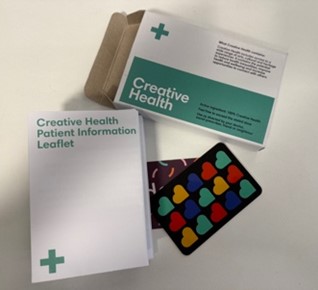
Participants highlighted useful resources, including Susan Magsamen and Ivy Ross’s book, ‘Your Brain on Art’, Daisy Fancourt’s newly published book, ‘Art Cure’ and local resources like the Creative Health information leaflet. They actively engaged with the session, contributed ideas, shared concerns and supported each other to problem-solve. The event was valued by participants and highlighted the importance of creating space away from work to talk about work, to consider work roles from different perspectives and to identify challenges and successful strategies.
One topic highlighted by many was the almost universal experience that arts professionals promote activities for well-being and health but like healthcare workers often struggle to follow their own advice. The suggestion to learn from the aviation industry and ‘put your own oxygen mask on before helping others’ was proposed as a take home message from the event.
My take home message was to encourage participants to recognise the value of the work they do. I used Damien Hirst’s artwork ‘Medicine Cabinet’, a simple everyday medicine cabinet to illustrate my point. He created this piece of art to ‘make the ordinary appear extraordinary’, and of course that is exactly what happens when we engage in art and creativity – quite ordinary activity has an extraordinarily positive impact on our health and wellbeing.
The training event ‘How Art Works’ was delivered as part of a wider capacity building programme for the community creative health workforce. This project is a collaboration between Sheffield’s two Universities and Doncaster’s Creative Health Board. It forms part of a new Model for Embedding Creative Health and Community Assets in Health Systems across the UK and is funded through the UKRI Mobilising Community Assets to Tackle Health Inequality Fund.
36 people attended this session. Participants included professional from the arts and cultural sectors, creative health workers, researchers and one expert patient.
The session was facilitated by Dr Nicola Gill, a GP Training Programme Director at NHS England and freelance Medical Educator specialising in the use of art and creativity in medical education. More information about the facilitator and resources used at the event can be found on her website www.theartofmedicine.co.uk
Cite this article:
Gill, N. (2026, March 6). How Art Works. Creative Health Boards. https://doi.org/10.7190/chb.2026.0220255642