Dave Cartwright, darts Creative Health Connector reflects on language, confidence and uncertainty at the intersection of health and creativity.
In 2024, I began working as the Creative Health Connector in Doncaster, as part of the UKRI project exploring the relationship between creativity, culture and health.
My background is in writing and theatre-making, and I’ve spent most of my working life in creative spaces: making theatre, working with communities and young people, developing ideas and being fairly comfortable with things that are messy, uncertain and sometimes difficult to define.
My role in Doncaster sits across the city’s three National Portfolio-funded cultural organisations: Cast, the regional theatre; Heritage Doncaster, the museum and library service; and darts, a creative arts charity. Alongside these organisations, I work with the Integrated Care Board (ICB), Public Health, the hospital, primary care, allied health professionals and VCSE organisations.
This means I move between a wide range of people and settings, from dance classes attended by participants referred through social prescribing to meetings with hospital therapy leads, including physiotherapists, paediatricians and occupational therapists, as well as strategic decision-makers and commissioners.
In many ways, I occupy a slightly unusual but privileged position: moving between two systems, health and the creative sector.
And it’s from this position that I’ve found myself returning to one question.
Do we understand each other?
By ‘we’, I mean those of us working across health and creativity, particularly as these two worlds increasingly come together through what we call Creative Health.
Both sectors are full of incredibly skilled people. Both care deeply about people. Both have knowledge, expertise, evidence and experience to draw upon. And both have a great deal to offer the other.
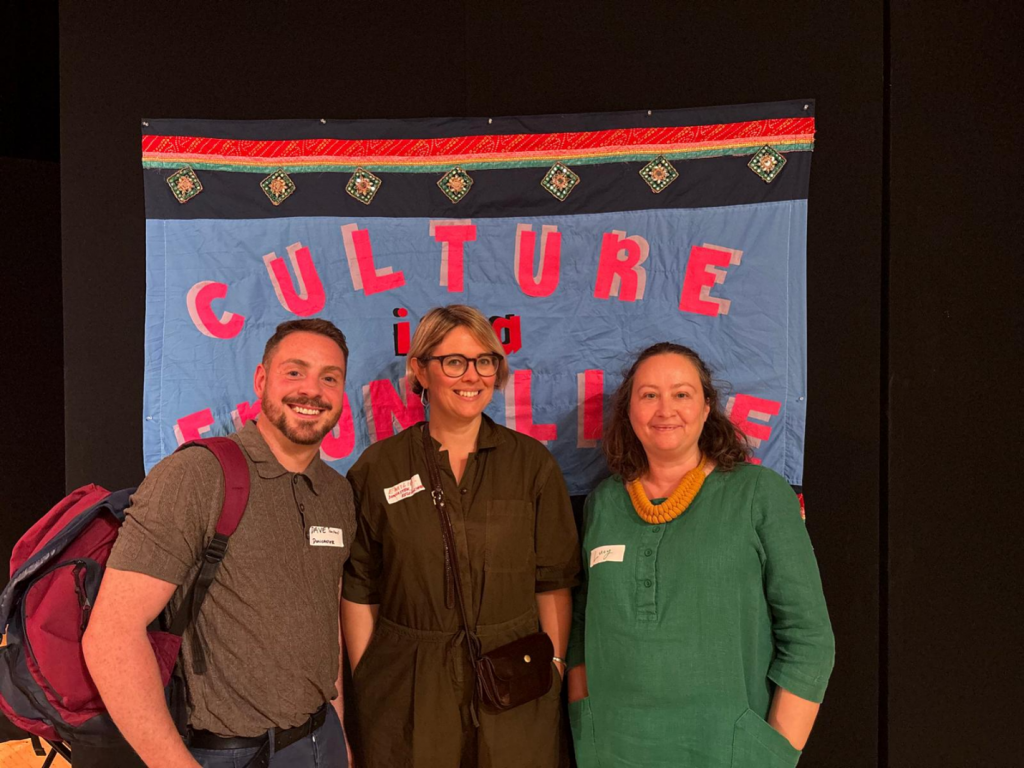
Yet sometimes, we don’t quite understand each other.
I don’t necessarily mean that we disagree. More often, we use the same words but interpret them differently. We approach the same idea from different perspectives, with different expectations of what it means and what it should achieve.
Take the word creative, for example.
In a room full of artists, there’s likely to be an immediate understanding of the breadth of what creativity can mean. But introduce the word into a clinical environment, where standardisation, risk management and clear processes are understandably important, and it may be heard quite differently.
It might conjure up arts and crafts. An intervention. A luxury add-on. Something a little airy-fairy, perhaps, or something that sits outside the main business of healthcare.
And while some of those interpretations might be frustrating, they’re not necessarily surprising. They reflect the experiences, assumptions and professional contexts people bring with them.
But when I talk about creativity, that’s rarely what I mean.
The same applies to so many other words we use across these systems: evidence, impact, outcomes, risk, process and many more.
The words themselves, and the actions that sit beneath them, don’t always translate neatly from one sector to another.
Over time, health and the creative sector have each developed their own languages, practices, evidence bases, expectations and understandings of what good work looks like. And those differences exist for good reasons.
In Creative Health, these different approaches meet. Sometimes they complement each other beautifully; sometimes, the mismatches become much more visible.
But I don’t think that’s something to be afraid of. In fact, I think it presents an opportunity.
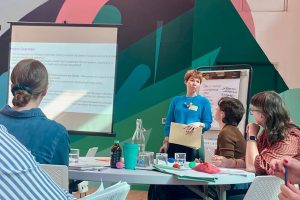
Through my work in Doncaster, I’ve had many opportunities to talk with and listen to people across health and creativity. I’ve delivered training for GP registrars through Doncaster and Bassetlaw Teaching Hospitals, presented to a borough-wide cohort of more than 300 GPs and primary care practitioners, and worked closely with primary care teams on referral systems. I’m also working with Dr Nicola Gill and a group of colleagues to develop a Creative Health learning module for the national GP registrar training platform.
Alongside these more formal opportunities, there are the countless day-to-day conversations, visits and experiences that come with working across both sectors.
Three things, in particular, have stood out to me.
1. Health is already creative. It just doesn’t always call itself creative.
One of the first things I’ve noticed is that people are already doing creative things all the time, often in ways that support their own health and wellbeing or that of others.
I’ve come across some fantastic examples of healthcare professionals using their creativity to support patients: a GP in Doncaster developing an app to support holistic health; another exploring the possibility of leading South Asian dance classes for patients; and a member of the ICB running community choirs.
But creativity also appears in less obvious ways.
It’s there when healthcare professionals adapt their approach, improvise, solve problems, make connections, tell stories or find a different way of doing something. Sometimes, it’s simply what helps them keep going in demanding and challenging environments.
More often than not, they don’t call any of this creative.
I think that’s important, because when we talk about Creative Health, there can be an assumption that we’re talking about introducing something entirely new into healthcare.
But what if some of the foundations are already there?
What if creativity is already present in the way people work, think, communicate and care for others, but hasn’t always been recognised or given the space to develop?
Perhaps the opportunity isn’t always to introduce something new. Perhaps it’s also to recognise what already exists, connect it to wider opportunities and give it room to grow.
2. Confidence is key, but it takes time to build.
The second thing I’ve noticed is the importance of confidence.
Not necessarily confidence in creativity itself, but confidence in talking about it, recommending it and understanding what it looks like in a healthcare setting.
When I talk to healthcare professionals about Creative Health, some familiar questions emerge:
- How do I bring it up with a patient?
- Who do I speak to about it?
- What does it actually look like?
- How do I explain what it is?
- How do I know it’s appropriate and safe?
- How do I know what I’m recommending?
When working with GP registrars, I’ve shared examples, videos, photographs, feedback and case studies. I’ve talked about my own experiences of visiting sessions, including the environments, the session leaders and the support structures around the work.
And still, those questions remain.
I don’t think that’s unreasonable. Healthcare professionals have responsibilities to their patients. They need to understand what they’re recommending, why it might be appropriate and what someone can expect when they take part.
But it has made me think more deeply about our central question: do we understand each other?
Perhaps the issue isn’t that healthcare professionals don’t value creativity. Perhaps they simply haven’t yet had enough opportunities to experience it, understand it or find the language to talk about it with confidence.
I’ve seen something shift when people experience Creative Health for themselves rather than simply hearing me describe it.
I’ve taken GPs, physiotherapists, social prescribers and DWP health coaches into dance classes, art groups and drumming sessions. Afterwards, I’ve heard comments such as:
“This is going to reshape my practice.”
And:
“My eyes have been opened. I need to take this back to my practice.”
There’s something powerful about seeing the work happen in front of you. You begin to understand not just what a session involves, but how people respond, how relationships develop, what the environment makes possible and what might be happening beyond what can easily be described in a referral or a report.
Experience doesn’t automatically answer every question, of course. But it can create a starting point for better conversations, more informed decisions and greater confidence.
Perhaps, then, the barrier isn’t always belief. Perhaps it’s understanding, and the opportunity to build that understanding together.
3. Uncertainty doesn’t mean failure.
The third thing I’ve been thinking about is uncertainty.
It would be easy to characterise healthcare as a system that needs certainty and creative practice as something free-spirited and boundaryless. But I don’t think that’s an accurate or particularly helpful distinction.
Both sectors work with uncertainty. The difference may lie in how we understand it, how we respond to it and how comfortable we feel working within it.
Of course, there are times when we need clear answers. Evidence matters. Safety matters. Risk needs to be understood, and decisions need to be informed.
But there are also moments in both systems when we reach the edge of what we know.
And that’s where things can get interesting.
Sometimes, we mistake not knowing the outcome for not knowing what we’re doing. We assume that if we can’t yet explain exactly what will happen, or how success will be measured, then we can’t be confident that anything meaningful is taking place.
I was reminded of this recently when I invited a physiotherapy pain management specialist to visit Feel & Flourish, a chronic pain project exploring movement and object handling. Led by Heritage Doncaster and delivered in partnership with darts, the project creates opportunities for participants to explore movement in a creative environment.
The physiotherapist joined in with the session and stayed afterwards to share her reflections.
She told me:
“I can’t tell you what the outcome is going to be, but I can see something is happening here.”
She went on to describe seeing a woman lift her legs clean off the floor and move them around, explaining that this was something she wouldn’t expect to see in a clinical setting.
Following the visit, she planned to take some of her learning back into her own clinical practice, share it with her team and invite members of the occupational therapy team to see the work for themselves.
What struck me most was her willingness to sit with that uncertainty. She couldn’t yet define the outcome, but she was curious enough to recognise that something meaningful might be happening.
That curiosity is so important.
“I can’t tell you what the outcome is going to be, but something is happening.”
Imagine what might be possible if we created more space for that kind of thinking across health and creativity.
I hear something similar from participants, too. Sometimes, someone will tell me:
“I don’t know why I come, but I feel different.”
That might not provide us with a neat explanation or a clearly defined outcome. But it gives us something to explore. It invites us to ask questions, listen more carefully and consider what we might be missing if we only look for what we already know how to measure.
Uncertainty doesn’t mean abandoning evidence, safety or professional judgement. It means recognising that not everything valuable is immediately understood, and that curiosity can be an important part of how understanding develops.
Creating a space where both sectors can flourish
When I reflect on these three things, I keep coming back to the same question: do we understand each other?
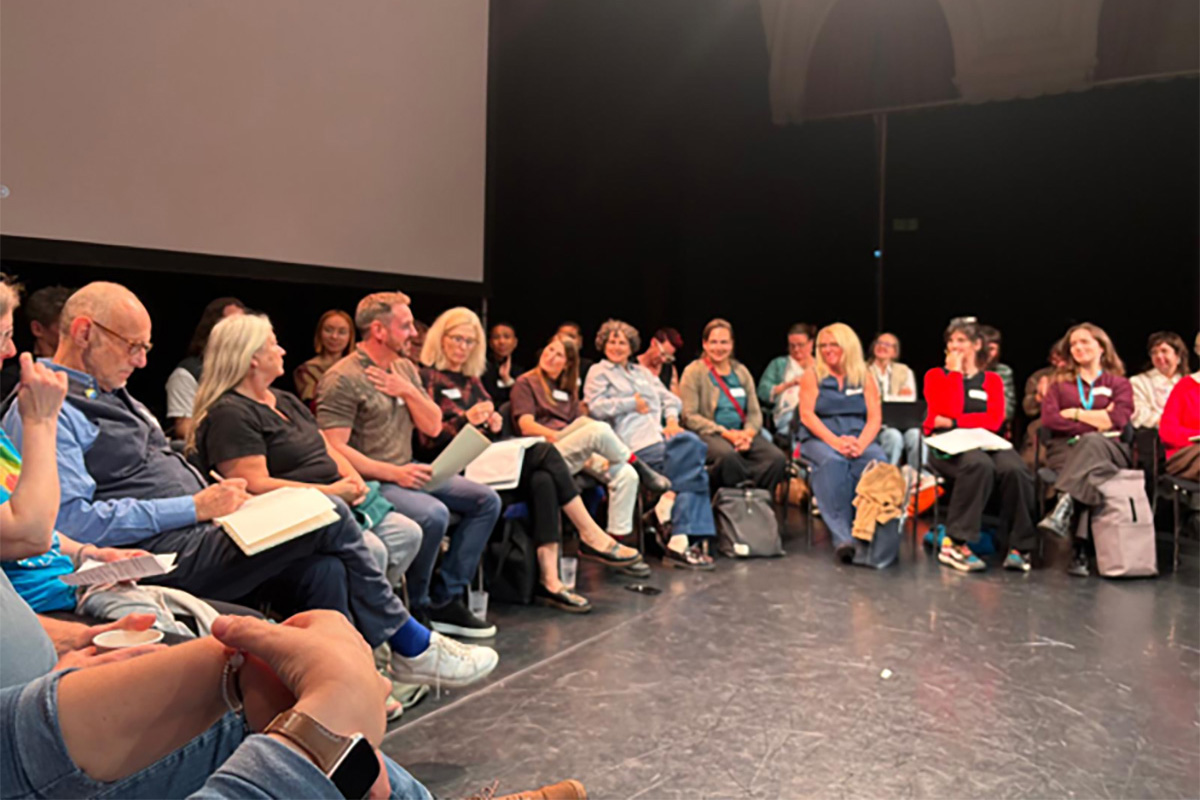
Whether the challenge is language, confidence, knowledge or simply a lack of opportunities to experience each other’s work, I think there’s a huge opportunity in the space where health and creativity meet.
As these two sectors come together, Creative Health is continuing to emerge as a field in its own right. We have an opportunity to shape not only how we work together, but also the language, relationships and approaches that will help us do so.
We don’t need to assume that one sector must adopt the other’s way of thinking. Nor do we need to smooth out every difference between them.
Instead, perhaps we can create a space where different ways of understanding the world can sit alongside one another.
- A space where evidence can coexist with experience.
- Where structure can coexist with emergence.
- Where safety can coexist with experimentation.
- Where expertise can coexist with curiosity.
- And where professional knowledge can coexist with lived experience.
For me, that’s one of the most exciting possibilities within Creative Health. Not simply bringing two sectors together, but creating the conditions for them to learn from each other, challenge their assumptions and discover what becomes possible when they do.
Perhaps understanding each other doesn’t mean speaking exactly the same language or approaching things in exactly the same way.
Perhaps it begins with being curious enough to listen, open enough to experience something unfamiliar, and confident enough to explore what we don’t yet know.
And perhaps that’s where the real work of Creative Health begins.
Cite this article:
Cartwright, D. (2026, October 29). Do We Understand Each Other? A blog adapted from Common Ground: CHWA International Conference 2026. Creative Health Boards. https://doi.org/10.7190/chb.2026.2269864358