Emilie Taylor is an Embedded Researcher in Creative Health, an Artist with a socially engaged practice and an Art Therapist (HCPC, BAAT)
Embedded Researcher Emilie Taylor reflects on the concurrent experience of attending Waiting in the Wings, a performance by Doncaster Peoples Theatre at Cast, and taking part in the Mayoral Authorities Creative Health Network Policy Co-Lab. She considers how the collective impact of creative health on people’s civic pride can contribute to successful devolution and ‘levelling up’, if we take care to retain localised and place-based approaches.
Waiting in the Wings
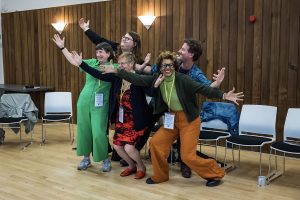
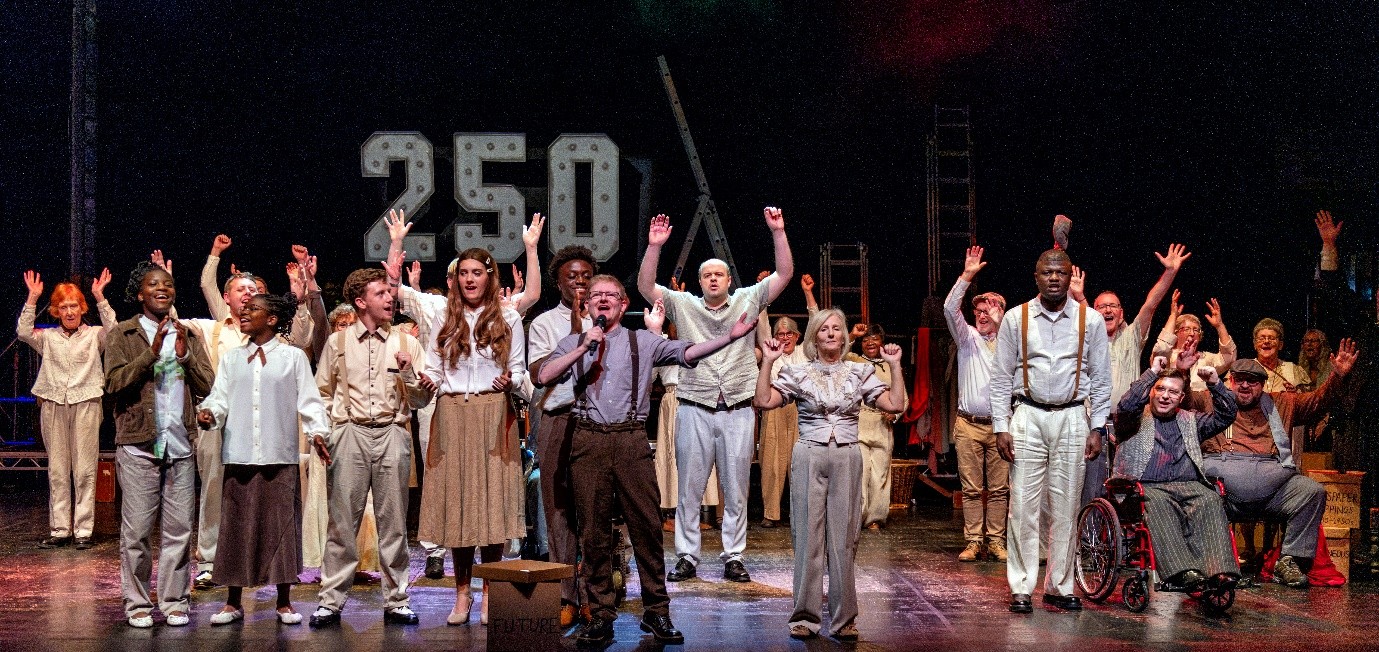
Leaving Cast on Saturday, after the second performance of ‘Waiting in the Wings’- a triumphant piece of work reflecting on 250 years of Doncaster cultural history- what stood out was the overwhelming sense of pride that had been generated through local people performing theatre.
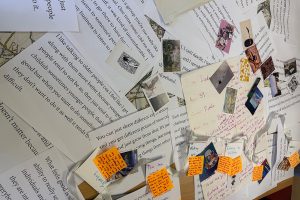
A work of skilLful co-production- members of Doncaster People’s Theatre1 conducted archival research, were involved in the writing process, and performed the play- the results were victorious. A bold and beautiful story interweaving the past with the present. WitW foregrounded diversity as part of a celebration of the role of culture in Doncaster’s resilience during times of adversity. At the post show Q&A audience members described feeling hopeful for the future after what they had witnessed, and a young member of Doncaster Peoples Theatre reflected; “I think it is really good that we are talking about our pride in history and commemorating what has happened in Doncaster in the past. Remembering all the positive aspects that people in the past have brought and how they still instruct us today.”
Another performer described how the company found strength in the history they were uncovering in the face of recent political unrest in the borough; “The recent demonstration that happened last week did put some members on edge. But we rallied together and said, we’ll do this as our way of fighting back! Putting on this show that says, we know the truth! Ira Aldridge on stage with us, declaring against slavery, and we will still be fighting now, and in another 250 years!”
Local MP for Doncaster Central, Sally Jameson summarised; “It’s been an incredible performance. One of the things it has brought to light is that we don’t shout loud enough about our creative history- or our cultural offer! What we have to do over the next 250 years is make sure Doncaster becomes known for our theatre, our dancing and our creativity, in the same way we are known for mining and racing!”
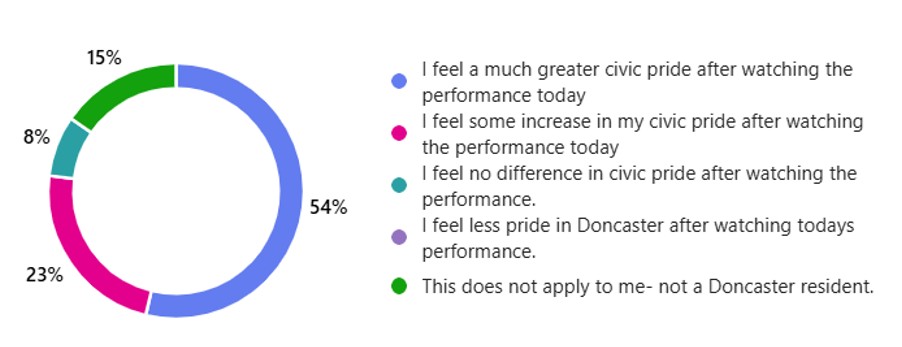
The results of a questionnaire circulated amongst the 774 audience members, confirmed the feeling of the evening. 77% of respondents cited an increase in their civic pride after attending the show, and of this number 54% specified a ‘much greater increase’ in their civic pride.
Strategic Combined Authorities and the Mayoral Authorities Creative Health Network
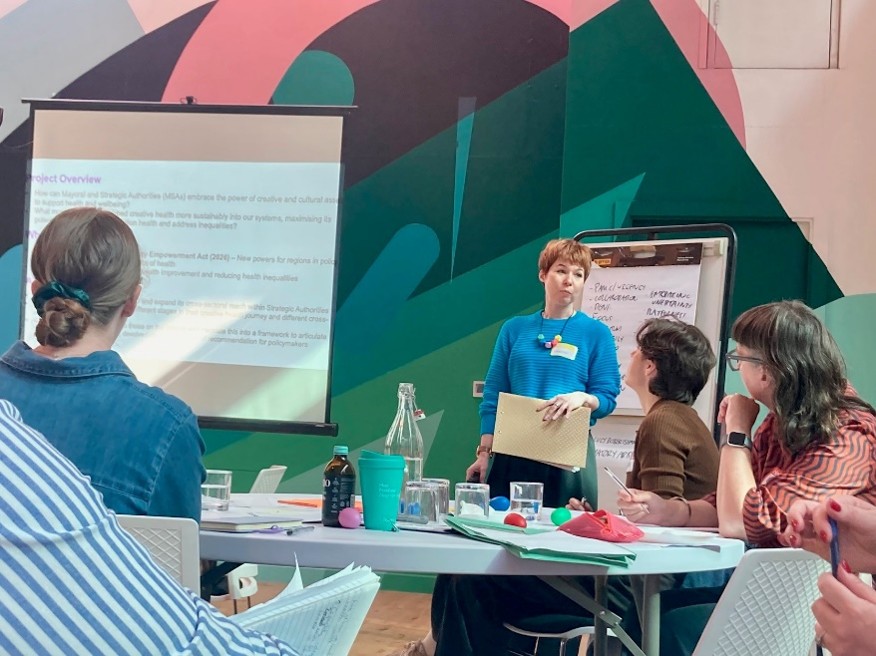
As an Embedded Researcher in Creative Health, and a member of the SYCHB I was invited to attend the Mayoral Authorities[1] Creative Health Network Policy Co-Lab, held at The Point, (home of darts in Doncaster), a couple of days after WitW.
The Mayoral Authorities Creative Health Network, (MACHN), is working to ‘map policy alignment and challenges across mayoral areas and establish a first of its kind framework for embedding creative health for growth into devolved strategy’. (Creative Communities, 2026). The event welcomed representatives from MSCA’s across the country, alongside people working in creative health.
MACHN will play a key role in embedding creative health into devolved strategy, to improve health outcomes across the country. In our region the Doncaster Creative Health Board are part of the the South Yorkshire Creative Health Board, (SYCHB), who work directly with SYMCA and the MACHN to inform policy and provision. A recent example of this work is the ‘South Yorkshire Creative Health Enabling Plan’, created by the SYCHB to support the South Yorkshire Integrated Care Strategy, the Health is Wealth Report, and the Mayoral Combined Authority’s ambitions for inclusive growth and prevention. (See Masssey, 2026).
At the workshop pride and placemaking emerged as recurring themes, with many participants describing them as fundamental to achieving better health outcomes. While the contribution of creative health to reducing health inequalities was widely recognised, discussions also emphasised the importance of fostering a sense of belonging, civic pride and connection to place. This perspective is reflected in Implementing Creative Health in Public Health Strategies (National Centre for Creative Health, 2022), which adopts a psychosocial lens to demonstrate how creative health interventions that strengthen community connections and civic pride contribute to improved health and wellbeing outcomes.
The impact of WitW on the participants, the performers and the audience a few nights earlier, felt like a clear example of this work.
Doncaster, Levelling Up and Civic Pride
Maintaining local, place-based focus as integral to the approach of creative health ensures not only better health outcomes, but can be connected, through generating civic pride, to better economic outcomes and increased agency for local communities and leaders.
The Government published ‘Levelling Up the United Kingdom’, (LUTUK) the white paper associated with its plans to devolve power and increase economic prosperity in the North, in 2022. Doncaster has been categorised as Level 1 under the UK Government’s Levelling Up prioritisation of places model, and in the 2023 Budget, Doncaster was both identified as a Levelling Up Partnership and, as part of South Yorkshire shortlisted as an Investment Zone. Doncaster Council summarise the 12 new missions of the levelling up paper using four broad areas, or themes:
- Boosting productivity and living standards by growing the private sector, especially those places where they are lagging;
- Spreading opportunities and improving public services, especially in those areas where they are weakest;
- Restoring a sense of community, local pride and belonging, especially in those places where they have been lost; and,
- Empowering local leaders and communities, especially in those places lacking local agency. (Doncaster, 2022)
It is easy to see that civic pride would play a key role in themes 3 and 4.
The Benett School of Public Policy, (BSPP), have written about the importance of civic pride and sense of place in specific relation to the UK’s current economic crisis and any future levelling up endeavours, referencing LUTUK.
“Helping individuals and communities in the face of ever-worsening circumstances by understanding how their current sense of place, as well as the strong roots and narratives of how places have weathered similar problems in the past, is perhaps going to emerge as one of the most important elements of the government’s plans to level up the country”. (Garling, O. 2022)
Alongside recognising how developing civic pride would be integral to delivery of theme 3, they also cite its importance in relation to one of the twelve ‘missions’ in the paper– “By 2030, pride in place, such as people’s satisfaction with their town centre and engagement in local culture and community, will have risen in every area of the UK, with the gap between top performing and other areas closing.” (HM Government Department for Levelling Up, Housing and Communities, 2022, in Garling, O. 2022).
Considerations Going Forwards
As part of the MACHN policy co-lab we were invited to reflect on the recent publication of the ‘English Devolution and Community Empowerment Act 2026’. Whilst we welcomed the act as strengthening the devolved power of MCA’s, and enabling work to be delivered with knowledge specific to local regions, Lucy Robertshaw, (Director of Creative Health at darts, Doncaster and Co-Chair of Doncaster Creative Health Board), emphasized that we must not fall into the trap of simply replicating successful work across regions or boroughs overseen by MCA’s using an ‘off the peg’ approach, but retain what is powerful about using creativity to respond to local needs and different circumstances.
As a sector we must recognise the strength of creative health work in pride and place-making, and its potential contribution, through building civic pride, to levelling up, and seek to retain a local- at times hyper local- awareness in our work.
Creative Communities (2026) Embedding Creative Health in Devolved Policymaking: the Mayoral Authorities Creative Health Network. Available at: https://creativecommunities.uk/research_articles/embedding-creative-health-in-devolved-policymaking-the-mayoral-authorities-creative-health-network/ (Accessed: 14 September 2026).
Department for Levelling Up, Housing and Communities (2022) Levelling up the United Kingdom. London: CP 604. Available at: https://www.gov.uk/government/publications/levelling-up-the-united-kingdom
Doncaster (2023) Doncaster Delivering Together Investment Plan 2023–2024. Doncaster: City of Doncaster Council. Available at: https://governance.southyorkshire-ca.gov.uk/documents/s14517/Doncaster%20Place%20Plan.pdf (Accessed: 10 September 2026)
Great Britain (2026) English Devolution and Community Empowerment Act 2026 (c. 23). London: The Stationery Office. Available at: https://www.legislation.gov.uk/ukpga/2026/23
Massey, R. (2025, November 7). South Yorkshire’s Creative Health Enabling Plan. Creative Health Boards. https://doi.org/10.7190/chb.2025.5371185181
National Centre for Creative Health (n.d.) Implementing creative health in public health strategies. Available at: https://ncch.org.uk/resources/implementing-creative-health-in-public-health-strategies (Accessed: 10 September 2026)
Osuh, C. (2026) ‘Fascism on the rise in the UK, Anglican bishop says’, The Guardian, 10 September. Available at: https://www.theguardian.com/world/2026/sep/10/fascism-on-the-rise-in-the-uk-anglican-bishop-says (Accessed: 10 September 2026)